Viktor Ullmann: musical triumph out of tragedy

Czech composer Viktor Ullmann was killed in the gas chambers of Auschwitz; new performances give his music a new and vibrant life

Society|Arts & Leisure
Michael Stein | 28.05.2012
Death offering the dictatorial Emperor Überall a chance to end the world's suffering in the Boston Lyric Opera's performance of Ullmann's 'The Emperor of Atlantis'

Of all the art forms that experienced a modernist renaissance in Central Europe in the first few decades of the 20th century, music was paramount, simultaneously advancing on and reconnecting with the German musical tradition of Bach, Mozart and Beethoven. The Czech contribution to this artistic flowering was considerable, ranging from Prague and Brno’s rich musical life, to Czechs gravitating to the artistic mecca of Vienna, to the exceptional generation of Jewish composers whose tragic ends coincided with the end of modern music’s golden age.

While the music of the era’s most prominent composers, such as Arnold Schoenberg and Alban Berg, has long been part of the repertoire, there remain many talented, even brilliant, composers whose work is much less widely known. Viktor Ullmann, born in Český Těšín in 1898, is one of these composers, and pianist Jeanne Golan, in performing and recording all of Ullmann’s piano sonatas, is trying to restore the composer to his rightful place while turning a spotlight on the tremendous bravery and artistic vision he and his fellow inmates of Terezín showed in creating art up to the very end.

Golan’s introduction to Ullmann’s music didn’t come about by her looking into the darkness of Europe’s past but through a musical affinity.

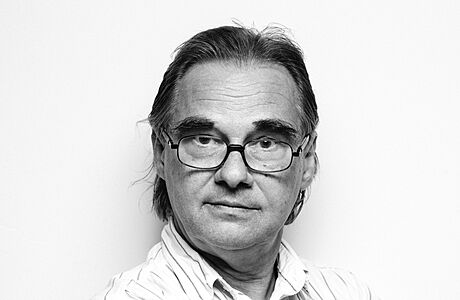
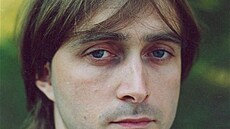
Viktor Ullmann

“I work a lot with living composers and one of them came across the scores of the Ullmann sonatas and looked at them and thought of me. So he called me and said, ‘I think I have a composer that you should play.’ It was a little bit of matchmaking, and it’s worked out beautifully,” Golan told Czech Position.

Even without taking his murder by the Nazis into account, Ullmann’s career was extraordinary. His family moved to Vienna when he was nine to further his education. Ullmann served in the army in the First World War, after which he returned to Vienna to study law and continue his musical education, with his musical skill confirmed by acceptance into Arnold Schoenberg's Composition Seminar.

Just a year later though, Ullmann married fellow composition seminar student Martha Koref and moved with her back to her native Prague. Immersing himself into the rich musical life of the newly established Czechoslovak capital he worked at the New German Theater under Alexander Zemlinsky.

Ullmann continued composing throughout the decade, seeing his work performed in one case on an “Evening of Prague Composers” together with composer Hans Krása, who would later join him at Terezín and Auschwitz. The other Czech-Jewish musical figures transported to the gas chambers in October 1944 were Pavel Haas and Gideon Klein.

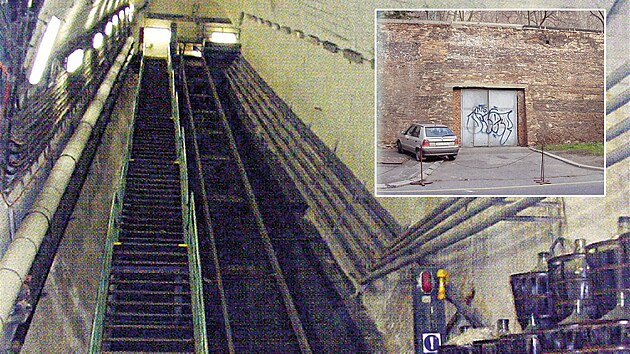
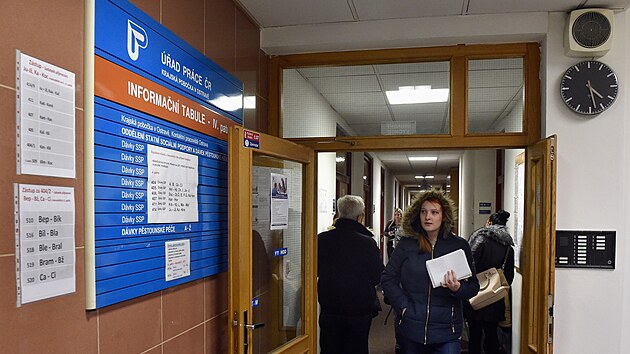
The Ghetto museum at Terezín

In the late ‘20s a personal and spiritual crisis caused Ullmann to turn away from music as he explored psychoanalysis, spiritualism and especially Rudolf Steiner’s anthroposophy movement. This led to his attempt to run an anthroposophical bookstore in Stuttgart, a venture that failed and sent him back to music with what Golan says was an renewed and strengthened seriousness.

Light against darkness

Golan says that while she considers Ullman’s sonatas accessible they contain a striking number of levels of reference, a modernist characteristic he was able to draw on due to his thorough and wide-ranging musical education. “Ullmann studied with Schoenberg, so he was well-schooled in that, but was equally well-schooled in all of the German Romantics, and Haydn, Beethoven and Bach, as well as cabaret. And he folds it all into the sonatas.”

Ullmann was sent to Terezín, or Theresienstadt, in September 1942, and Golan says that among the artistic detainees his arrival was seen as a coup. Remarkably, Ullmann became extremely active in the camp’s artistic life, a life that was allowed to go ahead because of the Nazi’s attempts to have Terezín viewed as a humanitarian relocation camp. Regardless of its rational Ullmann was extremely active at the camp, being in charge of assigning practice rooms for musicians, writing music reviews in a camp journal and starting evenings of new music to give exposure to Terezín’s young composers.

Nevertheless, the sinister outside world couldn’t be kept out altogether. “Ullmann lost his wife in the first few months that they were there. In that autobiographical way the first sonata he wrote when he was there was dedicated to her memory. The slow movement is absolutely heartbreaking,” Golan said.

Pianist Jeanne Golan

Considering the brutality they faced it is amazing that such exceptional music was composed and performed at all. One characteristic of Ullman’s music that broke through the harsh emotional and physical conditions at Terezín is humor. “He must have had a wickedly funny sense of humor because there are some really clever things that he does,” Golan said. “I think the thing that surprises people who knew what Terezín was is how much joy there is in the music, even charm, and how much defiance or triumph in the ways he brings the music round.”

Golan acknowledges that it can be helpful to know the circumstances in which Ullmann composed and performed his music in Terezín, but it is not as fundamental as the music itself. Performing all of Ullman’s piano sonatas means she is reuniting music composed in freedom in Prague with that composed at Terezín.

Show comments
Comments:0

Popular content

view counter