Václav Havel dies at 75

Václav Havel, the Communist-era dissident and playwright turned president and global human rights advocate, died Sunday morning

Society
Brian Kenety | 18.12.2011
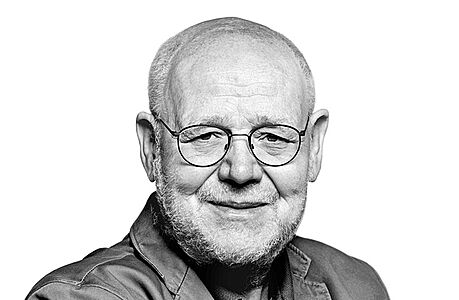
Václav Havel, Czech statesman, writer, humanitarian (October 5, 1936 – December 18, 2011)

Václav Havel, the first post-Communist president of both Czechoslovakia and the Czech Republic, known worldwide as a promoter of human rights, died on Sunday morning, likely due to complications from a recent bout of his chronic respiratory illness. 

Havel, who turned 75 in October, had been in a fragile state since checking in to the Central Military Hospital in Prague in early March, and was seldom seen in public in recent months, though he did appear with his old friend, the Dalai Lama, last Saturday. His wife, actress Dagmar Havlová, and a nun were at his bedside when he died at his country villa, Hrádeček, Czech public television reported.

“Václav Havel became the symbol of the modern Czech state. He is honored for his brave fight against communist totalitarianism, as the leader of our Velvet Revolution and first president of our free country,” his successor, President Václav Klaus, said in a televised statement Sunday afternoon. “His character, name and work significantly helped the Czech Republic quickly integrate into the community of free and democratic nations.”

Havel with former Polish dissident Adam Michnick, last year

A former chain smoker until he had half of his right lung removed in 1996 due to a malignant tumor, Havel’s health had suffered during the years he spent in jail in the 1980s for his opposition to Communist rule. He underwent a colostomy in 1998 after his colon ruptured while on holiday in Austria.

Havel was considered the father of the Charter 77 (Charta 77) civic movement that criticized the Czechoslovak government for failing to implement human rights provisions of the country’s Constitution, and a number of international treaties to which it was a signatory — including United Nations covenants on political, civil, economic, and cultural rights.

The famously humble politician was more closely associated than any other Czech with the Velvet Revolution — the non-violent movement that began with a peaceful student demonstration in Prague on Nov. 17, 1989 and ended less than six weeks later in the end of the Communist government in Czechoslovakia.

On his doctor’s recommendation, Havel did not attend this year’s state celebrations in the Czech capital marking the start of the Velvet Revolution, a state holiday known as “Freedom and Democracy Day.” This summer, fearing the worst was at hand, his wife canceled plans to attend the closing ceremony of the 46th Karlovy Vary International Film Festival (KVIFF).

© YouTube In a 2007 appeal, Havel talks about the Communist regime in Cuba and the position he was in to promote free thinking and other freedoms that citizens of the island nation are deprived of in their own country; he also actively campaigned for human rights and democracy in Russia, China and Belarus

Statesman, writer, humanitarian

Havel was the tenth and last president of Czechoslovakia (1989–92) and the first president of the independent Czech Republic (1993–2003) after its split with Slovakia (which he opposed). During his time at Prague Castle, the anti-communist his country joined NATO and began negotiations for membership in the European Union, which was attained in May 2004.

Václav Havel at the United Nations; he often appeared uncomfortable in the public limelight, preferring the informal company of artists to statesmen

In an interview with Karel Hvížďala (also included in Havel’s memoir To the Castle and Back), the former statesman said he felt his most important accomplishment as president was the dissolution of the Warsaw Pact. After leaving office, he remained an outspoken advocate for human rights and democracy in Cuba, Russia, China and Belarus, in part through the Forum 2000 foundation, which he cofounded in 1996 with Japanese philanthropist Yohei Sasakawa and Nobel Peace Prize laureate Elie Wiesel. As co-founder of the Dagmar and Václav Havel Foundation Vize 97, he has supported humanitarian, health and educational projects.

The Czech statesmen was also a respected writer, whose more than twenty plays and numerous non-fiction works were translated internationally. His articulation of “Post-Totalitarianism” (“Power of the Powerless”) — a term used to describe the modern social and political order that enabled people to “live within a lie,” as he put it — is often singled out as being especially noteworthy.

Havel last year also directed his debut film “Leaving” (Odcházení) — he had wanted to study film at university but was banned from doing so. The theater of the absurd style film recounted the struggle of a former top statesman to come to terms with his departure from power, though he insisted it wasn’t autobiographical. Among his many honors, Havel — whose motto was ‘Truth and love will win over lies and hatred’ — received the US Presidential Medal of Freedom, the International Gandhi Peace Prize, and Amnesty’s Ambassador of Conscience Award

Among his many honors, the human rights campaginer — whose motto was “Truth and love will win over lies and hatred” — received the US Presidential Medal of Freedom, the International Gandhi Peace Prize, and Amnesty International's Ambassador of Conscience Award for his work in promoting human rights.

Havel was also nominated many times for the Nobel Peace Prize and was awarded multiple honorary doctorates from various universities around the world. He was also voted 4th in Prospect magazine’s 2005 global poll of the world’s top 100 intellectuals.

Now under construction, the Václav Havel Library, located in Prague’s Hradčany district, was established in 2007 to collect works from various stages of his life – dissident, playwright and as the last president of the former Czechoslovakia and first president of the Czech Republic. Havel, then 74, told reporters that the library should serve not to build his personal memorial but to create “an epicenter of spiritual, social and literary life in Prague.”

Havel shares a laugh with with fellow playwright Tom Stoppard

Czech billionaire Zdeněk Bakala is funding the project, which was inspired by presidential libraries in the United States. “The Czechs can be quite cynical about their leaders, and their cynicism is oftentimes exploited in day-to-day politics because it facilitates the sort of mud-slinging that pervades Czech politics,” Bakala told Forbes magazine.

“The Library will attempt to portray President Havel and his time in a factual manner, free of the politically charged interpretations and reinterpretations of his deeds and thoughts that we witness today,” he said. 

Show comments
Comments:1

Comments

Czech Position values democratic discussion. Please respect the Terms of Service, which are intended to encourage correct and meaningful communications.

By entering your comment, you agree to these rules. We reserve the right to remove improper comments.

Thank you for your cooperation.

Very sad, here's what Keith Richards had to say about Havel

"We gave Vaclav this little white remote control with a tongue on it. He walked around lighting up the palace, and suddenly statues came alive. He was like a kid, pushing buttons and going, whoa!"

Hide comments

Popular content

view counter