Trial of MP Bárta on bribery charges gets under way
On first day of much-anticipated trial, MP Škárka alleges ‘godfather’ lobbyists Janoušek and Hrdlička financed Public Affairs party

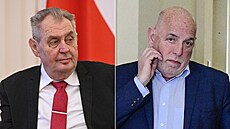
The trial of Czech MPs Vít Bárta (paymaster and de facto leader of Public Affairs, the smallest of the tri-party Czech coalition government) and his former party colleague Jaroslav Škárka (unaffiliated) got underway on Monday. Bárta stands accused of paying bribes (for “silence and loyalty”) and Škárka of accepting one. As expected, both pleaded not guilty. Bárta could face a six-year prison sentence if found guilty.
“From the moment [Roman] Janoušek and [Tomáš] Hrdlička entered the [Public Affairs] party, it started to show undemocratic traits, following people, and holding concept consultation meetings,” Škárka, who could face up to three years in prison if found guilty of accepting a bribe, told the packed district court in Prague 5 on Monday.
Entrepreneurs Janoušek and Hrdlička, who have been linked to numerous corruption scandals in recent years, are together with several others are widely referred to in the Czech media as the “godfathers” or “gray eminences” of the center-right Civic Democrats (ODS)
“The non-transparency of the party’s finances, for example financing through ‘contributions’ from Mr. [Michal] Babák and others, dates from those years. Public Affairs simply succumbed to the influence of Vít Bárta, and I didn’t agree with the party’s autocratic direction,” Škárka told the court.
From promising debut to political oblivion
‘At one of the concept consultations Bárta said the party had received Kč 200 million from Janoušek and Hrdlička to get it going’Public Affairs, which first won parliamentary representation in the 2010 elections gaining 24 mandates in the 200-seat lower house, has seen its ratings in opinion polls plunge into oblivion since the Bárta bribery scandal erupted in April 2011 and lost three MPs. According to recent polls if elections were held now Public Affairs would not win a single seat in parliament.
In the run-up to the 2010 election, allegations were heard from political opponents that Janoušek was financing the upstart party and its official leader, Radek John, with the aim of enticing voters from the center-left Social Democrats (ČSSD).
However, Škárka’s claim on Monday was the first from a party insider (albeit a former one) that Janoušek and Hrdlička were instrumental in the party’s emergence.
“At one of the concept consultations Bárta said the party had received Kč 200 million from Janoušek and Hrdlička to get it going, and that we would have to return that investment. [Bárta’s wife Kateřína Klasnová, a VV deputy] then asked how much would have to be returned, and Bárta said probably twice the sum,” Škárka told the court.
The Bárta bribery scandal broke early last year when Škárka revealed to the press that Bárta had paid him a bribe of Kč 170,000 to secure his loyalty. He was shortly followed by another Public Affairs MP, Kristýna Kočí, who said Bárta had paid her Kč 500,000. She then handed the money to the police and filed a criminal complaint against Bárta, whose parliamentary immunity was removed by a quorum in the lower house.
Škárka is facing charges of accepting a bribe because he spent several thousand crowns from the amount given to him Bárta and failed to report the suspected bribe within a reasonable time period.
No IOU's
Public Affairs chairman John was also ejected from the head of the Ministry of Interior due to fears of ABL detectives infiltrating state security organsBárta does not deny that he gave the two cash, but claims that in both cases it was a loan; however, he has produced no evidence to back up his claim. When asked at Monday’s hearings by Judge Jan Šott why he did not ask Kočí or Škárka to sign some sort of agreement, Bárta responded: “[B]ecause for me cash was the fastest way. To this day I consider it to be my worst mistake in politics. I should add that I was used to dealing in cash as an entrepreneur. I didn’t ask for interest — I’m not a loan shark — and I went into politics to do something good for people,” he said.
Bárta claimed that he lent money to Škárka on previous occasions among others to buy clothes and also arranged for Škárka to use the services of his lawyer free of charge.
“I never borrowed a single crown from Bárta. Only in 2006 I borrowed Kč 25,000 from Mr. [Josef] Dobeš (VV) under an agreement with a repayment timetable,” Škárka responded.
Shortly after Kočí and Škárka filed complaints against Bárta and resigned from Public Affairs, the daily Mladá fronta dnes published audio recordings of Bárta addressing the management of the ABL security firm, which he founded, owned and directed before being elected to parliament.
On the tapes Bárta says he intended to use political power to secure new contracts for the security firm, which he sold to his brother before entering parliamentary politics and the cabinet as minister of transport. On the same recording he emphasizes the strategic advantage of gathering personal information on influential people for which, he suggests, female accomplices are ideal.
The bribery scandal and the ABL recordings led not only to Bárta being forced to resign from the transport ministry: Public Affairs chairman John was also ejected from the head of the Ministry of Interior due to fears of ABL detectives infiltrating state security organs.
Public Affairs MPs Klasnová and Karolína Peake were called as witnesses on Monday and both claimed Kočí had told them she intended to turn Bárta’s supposed loan into a bribe.
Questionable lover
‘Knowing Vít Bárta’s methods, it wouldn’t surprise me at all if everyday two or three men appear and claim that they were my lovers’ Another surprise during Monday’s hearings came in the form of a certain Tomáš Vacka who requested to be called as a witness. “I maintained an intimate relationship with Kristýna,” he told the court shortly after the session opened, presenting his ID card.
Kočí later told the daily Lidové noviny that she had never even seen Vacka before in her life, let alone known him. “Knowing Vít Bárta’s methods, it wouldn’t surprise me at all if everyday two or three men appear and claim that they were my lovers and know how everything happened,” Kočí said.
Vacka, an unknown figure in Czech parliamentary politics or public life, was eventually sent home by Judge Šott, who said he would consider whether to question him as a witness according to the testimony to be delivered by Kočí.
Preliminary hearings in the case are expected to be held every day this week until Friday. Various legal experts say they expect the trial to be protracted.