Schwarzenberg’s travels undercut domestic duties

As foreign minister, TOP 09 leader Karel Schwarzenberg has spent 96 days on official visits abroad to the detriment of domestic politics     

Politics & Policy|Foreign Affairs
Martin Shabu | 13.06.2011
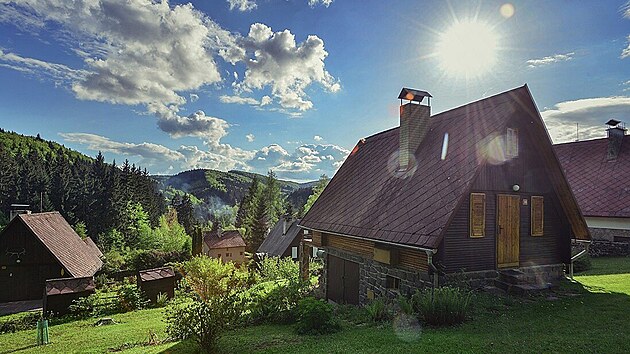
Schwarzenberg recently suggested Krtek (‘little mole’) would make a good symbol for the country of ‘tunnelers’

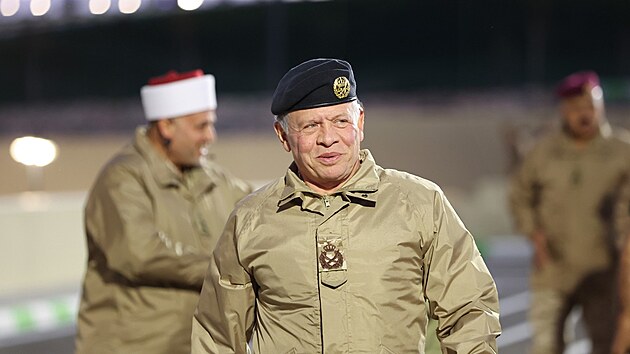
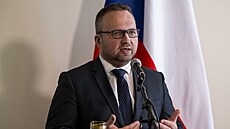
Karel Schwarzenberg has just marked a jubilee: His visit to Trieste, Italy, on June 10 was his 50th official foreign visit since becoming foreign minister in July 2010. There is increasing chatter that Schwarzenberg is spending too much time abroad, which is reportedly playing into the hands of power cliques in the foreign ministry and “rogue elements” in his own TOP 09 party. The disparaging motto “keep granddad in the air” is widely heard in the corridors of power.

Czech Position has used available public sources to quantify Schwarzenberg’s foreign engagements and the results are surprising. Since taking up the post of foreign minister, the TOP 09 leader has;

  • spent 96 days on official foreign visits
  • made a minimum of 50 trips in 11 months
  • visited more than 40 countries 

This is an impressive record for the aristocrat politician born now in his mid ’70s.   

“You know, it’s simply the duty of the foreign minister to travel around the world,” Schwarzenberg told Czech Position, dismissing A politician who takes on a number of public functions simultaneously must be prepared to pay careful attention to diligently fulfill those roles, but Schwarzenberg is not managing.the speculation that foreign ministry officials — in cahoots with TOP 09 representatives — are intentionally keeping him away from politics in Prague. “I cancelled a trip to Hungary because of the Sunday meeting of the K9,” Schwarzenberg said referring to the meeting of the heads of the three-party (Civic Democrats-TOP 09-Public Affairs) ruling coalition.

Schwarzenberg revealed his antipathy to domestic political intrigues on his recent visit to the United States, when in Atlanta, Georgia, he called the coalition partners “dimwits” and added that he was glad he doesn’t have to attend the K9 meetings where there are constant discussions about the future of Prime Minister Petr Nečas’ government. “As soon as he entered Černínský Palace [the seat of the Czech foreign ministry] people were counting on the fact that he wouldn’t be in the building much,” a Czech diplomat, who understandably wished to remain anonymous, told Czech Position.           

The Svoboda comparison

A politician who takes on a number of public functions simultaneously must be prepared to pay careful attention to diligently fulfilling those roles, but critics say Schwarzenberg is not managing. Given that he is First Deputy Prime Minister, Minister of Foreign Affairs, Chairman of TOP 09, and an MP, he speaks about developments in the Czech Republic much less than he should.

Cyril Svoboda (Christian Democrats, KDU-ČSL), who served as foreign minister from 2002 to 2006, was at the same time also the leader of his party. In the first 11 months as foreign minister, he made only 25 official foreign trips. According to available information, during this period Svoboda spent 39 days abroad, which is about two and half times less time than has Schwarzenberg, and this gave him more time to play a part in and influence political life at home. “Svoboda definitely dedicated more time to his party,” Schwarzenberg admitted, adding that he prioritizes fulfilling his ministerial role.

At the same time, the TOP 09 leader told Czech Position that he isn’t in anyway excluded from political discussions because party colleagues keep him informed about all domestic political developments. An anonymous source in the Civic Democrats (ODS), however, claims otherwise: “Everyone in the ODS who wants to implement something knows that he must go through the chairman — Nečas. For Public Affairs (VV) and TOP 09, this is not the case,” the source said referring to the weak influence of the leaders of the smaller coalition parties, Radek John — the VV defacto party leader is Vít Bárta — and Schwarzenberg.

Comfort of comfortable majority

There are two reasons why Schwarzenberg has been able to afford to travel the world and pay relatively little attention to domestic politics. The first is the comfortable majority of 118 parliamentary seats the ruling coalition enjoyed until recently, enabling the more-or-less smooth passage of government legislation through parliament.

Svoboda faced different political circumstances: His KDU-ČSL party was one of the two minor parties in the coalition headed by the center-left Social Democrats (ČSSD), which had a parliamentary majority of just one seat. Absence of any of the coalition MPs could result in the rejection of important legislation. For example, in April 2004, a week after being involved in a serious car crash, Svoboda attended parliament in a wheelchair accompanied by a doctor to help override a veto by President Václav Klaus of the law on value-added tax (VAT, or DPH in Czech). The foreign minister would be advised to better balance his time between foreign visits and the negotiating table with the coalition partner        

The other reason is different rules for the current coalition. The leaders of the two minority parties are not obliged to attend cabinet meetings. Former Prime Minister Mirek Topolánek (ODS) always insisted that Green Party (SZ) leader Martin Bursík and KDU-ČSL’s Jiří Čunek attend government meetings as heads of the coalition parties, an anonymous source close to the ODS leadership told Czech Position. The coalition government led by Topolánek was in power from January 2007 until March 2009.    

Symbol of respect without impetus

After Václav Havel, abroad Schwarzenberg is arguably the best-known and probably the most-respected Czech politician of the post-Communist era; he certainly has a higher profile than Svoboda. In this regard, observors say it is certainly a good thing for the country that it has a chief diplomat with such a reputation among foreign partners.

Nevertheless, Schwarzenberg would be advised to better balance his time between foreign visits and the negotiating table with the coalition partners because as a party leader he cannot afford to ignore domestic political developments, critics say. What is more, Czech politics needs his positive noble attributes: his overview and sense of fair play. It was precisely these characteristics of Schwarzenberg’s that secured TOP 09 its impressive result in the last parliamentary elections.  

Show comments
Comments:0

Popular content

view counter