FinMin Kalousek’s law which everyone ‘sh**s on’ heads to cabinet

Bill on financial checks introducing managerial responsibility and independent internal audits in the public sector likely to disappoint

Politics & Policy
Lukáš Novotný | 17.01.2012
Finance Minister Miroslav Kalousek's proposal is unlikely to ring many change in public sector accounting and accountability

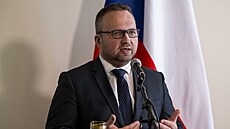
Minister of Finance Miroslav Kalousek (TOP 09) has fulfilled one of the points of the coalition government’s strategy to fight corruption and on Wednesday the government will discuss the bill drawn up by his subordinates aimed at introducing manger's responsibility and internal audits in the public sector. The legislation has one “small” shortcoming: if passed, the amendments will further complicate the already complex system of financial management and checks. The question is whether it’s the result of incompetence, or intentional.  

Czech civil servants in ministries have long since attempted to block the legislation aimed at introducing genuine managerial responsibility and establishing independent internal audits. The current system is based on finances often controlled by acquaintances dating back to the period of so-called “Normalization” following the Soviet-led occupation of Czechoslovakia in 1968. The flawed system of checks currently in place has resulted in serious problems drawing EU grants and finances from national funds. 

Initially the three-way coalition government (Civic Democrats, ODS; TOP 09; Public Affairs , VV) counted on replacing the obsolete law on financial checks with completely new legislation which would introduce internationally endorsed tools for financial management of the public sector. Nevertheless, around a year ago the Ministry of Finance, with the consent of the cabinet, reneged and instead started drafting amendments to the current law.

How does it work in practice?

The reality is auditors of state institutions are at the mercy of the civil servants they audit and they lack the most important basis – professional independenceKalousek’s bureaucrats in the finance ministry are taking advantage of the fact that the majority of politicians don’t have — or don’t want to have — an in-depth understanding of audit processes and preventative mechanisms which if implemented would substantially reduce senseless waste and misuse of public funds. The law on financial controls above all defines measures for endorsement of public revenues and spending, financial checks, internal audits and basic rules of economic management and efficiency. But the law has major shortcomings.

The system for approving public revenues and spending lacks measures defining accountability for personal responsibility. To illustrate this point, it suffices to ask the question when a civil servant or politician was last fired for approving a contract which was disadvantageous to the state. One can find a whole range of reports of suspect, or disadvantageous spending by ministries and state organs, but it’s hard to find anyone who has been brought to book for their role.

Although the fundamental basics of sound economic management are defined by the law, individual state institutions do not have binding regulations which lay down rules for applying those principles. Do politicians and civil servants approve economic and cost-effective purchases and spending which aren’t overpriced? The answer is clearly no, far from it.

A short digression: Back in 2007, in an internal government report on measures for dismissing internal auditors contained in the law on financial checks, Kalousek wrote the following: “What’s to be done with this law that everyone sh**s on?” But shouldn’t it be first and foremost the Minister of Finance who ensures that under his leadership legislation on state finances is produced which everyone must take seriously and adhere to? 

Internal audits are also described in several paragraphs of the current version of the law. But the reality is auditors of state institutions are at the mercy of the civil servants they audit and they lack the most important basis – professional independence. This is something else the finance ministry has long resisted implementing, which again leaves us guessing whether this is a consequence of incompetence, or intentional.

The management, i.e. civil servants and politicians, have defeated the legal owners – the tax-paying general publicIn private companies auditors answer to audit committees which endorse yearly plans, salaries, funds for training, and discuss the results of audits. One of the prime purposes of audit committees is to defend the interests of company owners and shareholders against management, which is interested first and foremost in remuneration.

Unfortunately it doesn’t work like that in the Czech state administration and Kalousek’s draft amendments do not provide for the establishment of audit committees along such lines. The management, i.e. civil servants and politicians, have defeated the legal owners – the tax-paying general public.

“Audit committees don’t have any executive function. They can issue opinions and make recommendations, but they do not have any legal bearing. I cannot imagine protection of auditors or advisory boards. For this reason they are not mentioned in international frameworks, and the European Commission has never officially called upon us to introduce them,” Miroslav Kalousek said recently in a statement published on the finance ministry’s website.
Could it be that the real reason for Kalousek’s unwillingness to introduce audit committees lies somewhere else? The possibility to influence auditors and the results of their work perhaps?

The Czech political establishment has learnt practically nothing in this area over the past 22 years and the only thing that is stubbornly enforced is subsequent checks. Even the very name of the relevant legislation — the Law on Financial Controls, which in practice should primarily define financial management and audits — indicates what the bureaucrats in the finance ministry know best how to do: put together an army of bureaucrats who conduct checks and in their official reports note mistakes, shortcomings, or suspicious transactions when it’s already too late.

Show comments
Comments:0

Popular content

view counter